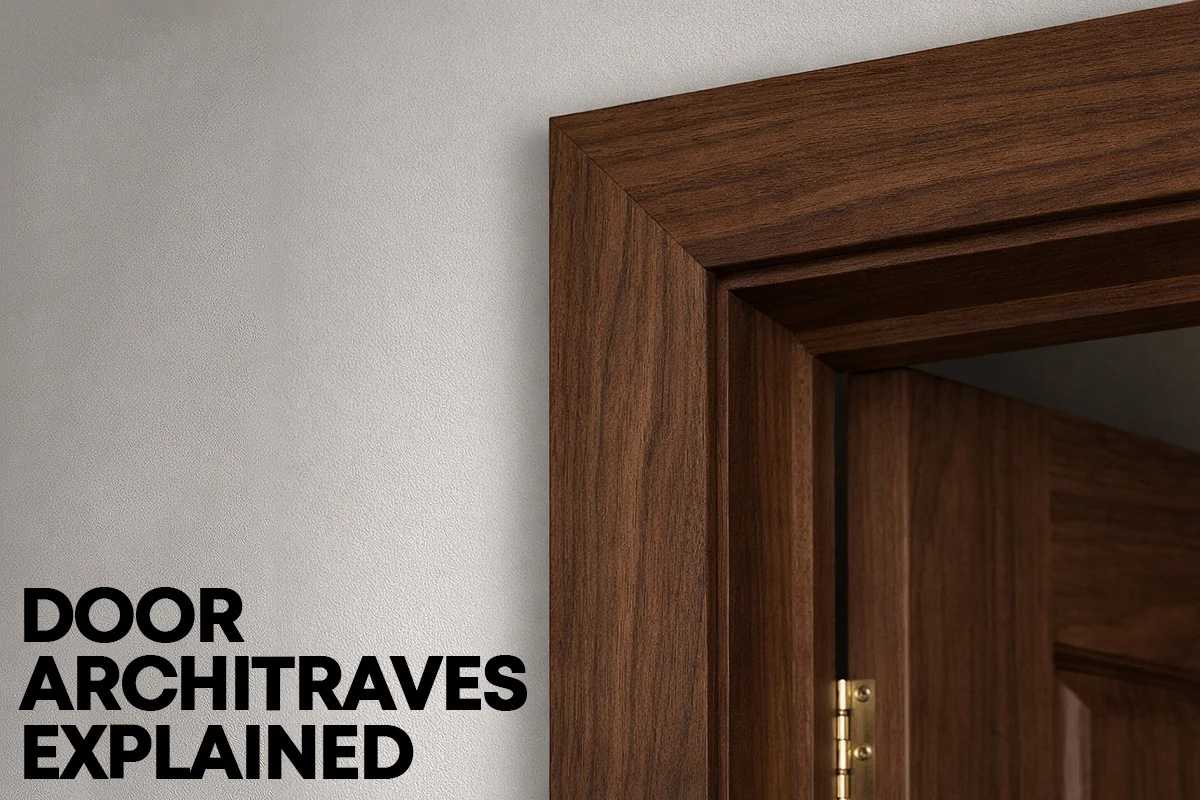
Architectural trim or moulding around the edges of a door frame is known as an architrave (commonly referred to as a door casing). The purpose of adding an architrave to your door frame is two-fold: to cover up the gap between your door frame and wall and to create a protective edge around the wall that may be damaged due to use.
When an architrave is installed, it will usually cover up any uneven plaster joints and create a visually appealing design element in the opening of the door frame. A simple door architrave has the ability to turn an ordinary door opening into an attractive architectural feature.
In this guide we will go over types of architraves, materials used for creating them, and the difference between external and internal architraves, as well as pricing options to allow you to purchase the right architrave for your budget.
Internal vs External Architraves
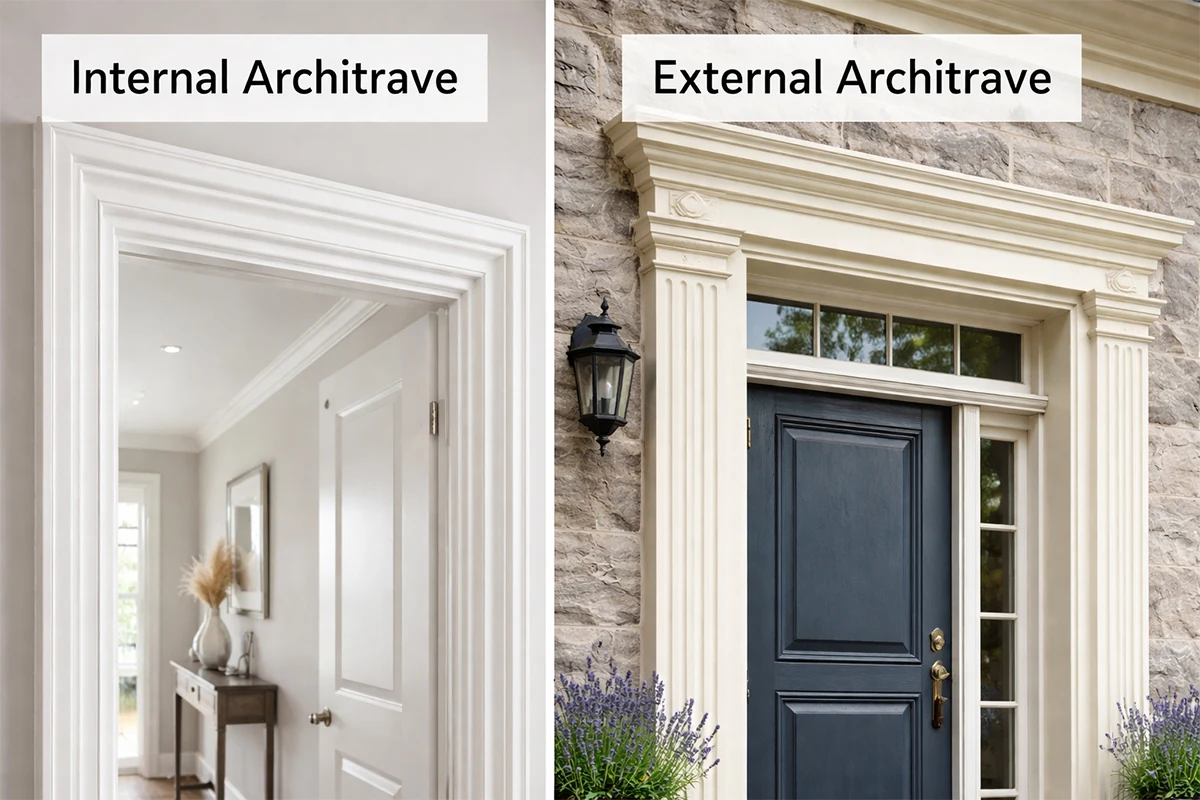
There are two major purposes for using architraves on internal door frames - as an ornamental feature or as an added touch in terms of finish. Many people tend to go with inexpensive options such as white primed/lightly painted MDF (medium density fibreboard), or softwood (i.e. pine), as both types are generally easy to paint. Moisture resistant MDF has almost universally been accepted by most manufacturers of internal trims, while the cost of softwoods makes them very attractive choices due to their effortless installation. Conversely, a hardwood product used on your architrave will provide your door with a more luxurious appearance, especially if it is manufactured from oak. An important aspect of all the materials used to make your internal architraves is that none of them can deal with water; therefore, if you purchase cheap quality MDF, you are likely to experience warping or delaminating if it gets damp. Interior-type architraves come either primed or painted white and can be further painted to match the walls.
Conversely, because exterior architraves must withstand the elements, they are constructed from higher-grade materials. The most common choice for exterior architrave is uPVC (plastic) which has been manufactured for outdoor use. Thus, uPVC will not rot or swell when exposed to moisture. Another viable option for exterior architrave is either tropical hardwood species or modified (acetylated) wood species such as Accoya. Accoya, which is a modified wood species, will not decay when exposed to moisture, and therefore is very durable. Lastly, while high-quality hardwood species such as Iroko or oak can be used on the exterior of a building, those materials will need to be properly painted and maintained in order to be considered viable options.
Common Materials
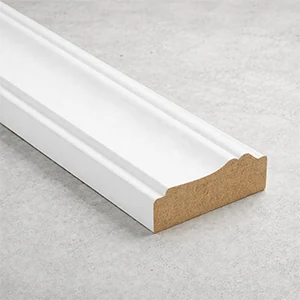
MDF Medium density fibreboard, or MDF, is sold primed white by many retailers. Easy to paint for a perfect result, poor-quality MDF is not waterproof and can expand in damp conditions, so only moisture-resistant MDFs (made with either wax or polymer) should be used in wet areas, such as bathrooms/outside.
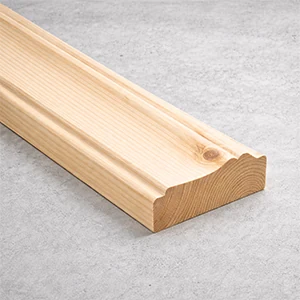
Softwood (Pine/Redwood) Affordable and lightweight, softwood architrave is sold both untreated and primed. Raw softwood has more grain than MDF, but it’s still fairly easy to work with and is stronger. But it must be painted or stained on all sides to protect it. Softwoods like pine are popular for modern interiors and can be very cost-effective.
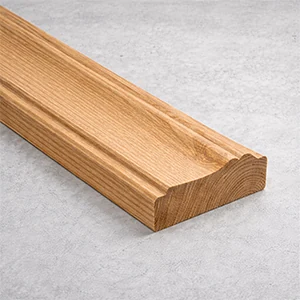
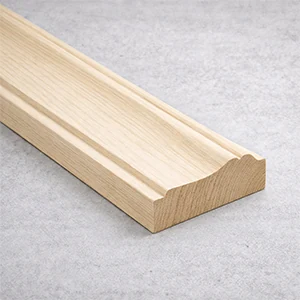
Hardwoods (Oak, Sepele, Walnut) Hardwoods are a premium option for your architrave. Oak is by far the most commonly used because of its strength, moisture resistant properties and aesthetic appearances. When looking at the grain and colour, oak has a prominent grain with a light colouration, giving it a traditional or classic look when used as an architrave. In addition, other hardwoods can be used such as sapele, ash and beech that also provide a beautiful and rich finish. Hardwoods with beautiful grain patterns and finishes tend to be priced higher. Still, they have excellent durability and will last for decades.
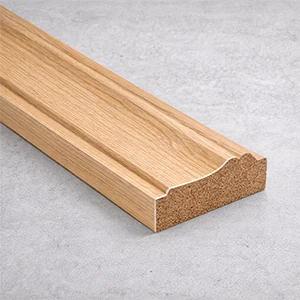
Engineered/Composite Some architraves are often manufactured using engineered materials, including hardwood veneer over a soft-core particle board or finger jointed pine. These items can be highly stable and simulate the appearance of wood. Also, primed composite boards (for example, MDF with a veneer) will be more stable than solid softwoods, resulting in less waste from installation and consistently producing a high-quality product.
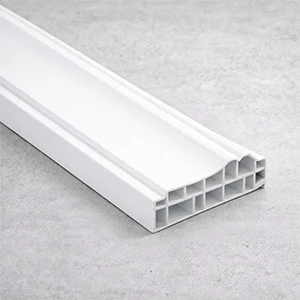
uPVC/Plastic It is common to see white or coloured uPVC architrave around exterior doors and windows. Some wetrooms will use uPVC architrave as well. These trims are manufactured prefinished and do not need to be painted. In addition, uPVC trim is impervious to water, insects, and is available in a variety of different woodgrain colours. uPVC trim is slightly more expensive per metre than MDF trim but has very little maintenance over the life of the product.
Accoya and Exotic Timber In the exterior building application, Accoya wood is a very high-tech and stable product that has great reliability. Some projects also include tropical hardwood species such as Inoya and Meranti that are naturally decay resistant. While these products are still new on the market, in terms of price they are niche products and can be priced per metre at the high end of the price spectrum. But they will last for decades with ease.
Types of Architraves
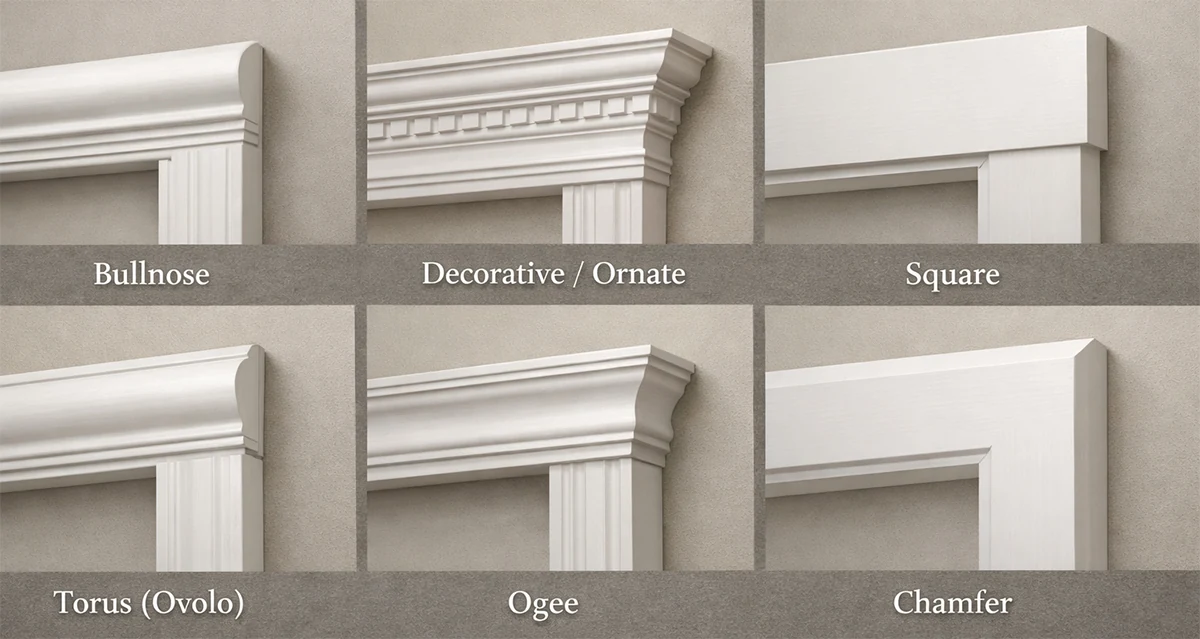
- Bullnose: A bullnose is an old-fashioned moulding profile. It has a flat front and one or two rounded edges. As this style of trim has been used for a long time, it will usually match the style of most doors. It can also provide a soft look to entranceways.
- Decorative/Ornate: Decorative mouldings include ornamental carvings made from 'bead' like features or hollowed grooves, for example, many buildings dating back to the Georgian and Victorian periods featured architraves with fluted columns or numerous curves. Another alternative is the `lambs tongue` design, which has rounded edges and is deemed a traditional design. Ornately designed profiles are typically used to enhance both period and traditional style buildings.
- Square: Is very basic modern construction. This profile has all of the edges square-cut with no curves to the edge. Minimalist trim is commonly found in newer buildings and provides clean lines with a modern appearance.
- Torus (Ovolo): A torus is a rounded or convex shaped architrave that when measured from the side, has a quarter circle shape (similar to a bullnose only much larger). A torus means any type of moulding that curves to form an edge that has more curve than all other types of linear architraves. Versatile in use with both modern and traditional designs, torus-shaped architraves continues to provide a soft arch-style appearance for many years since it never goes out of style.
- Ogee: It is an architrave that has a concave S-shaped profile and is commonly found in high-quality traditional trim-type work in Georgian or Victorian homes. The ogee profile provides a classic, elegant appearance that often enhances the period character of the property and adds to the home's original old-school look.
- Chamfer: The chamfer style of architraves have a simple bevel along its entire length of edge cut at a 45-degree angle. The result produces a simple, clean slanted edge at both ends, giving an up-to-date, modern look. Furthermore, by creating a simple bevelled edge, it will also reduce any saw marks left from the cutting tool when creating the architrave. Chamfer skirtings account for a large volume of sales due to their popularity and are used as a transitional style between square and round type architraves.
Cost Considerations
The price of architraves can differ greatly from one to another because of their material selection, size or the amount of detail required. For example, the cheapest material for an architrave is primed MDF and an example of just this type would be a pack of 5 pieces of a pencil-round profile architrave that you could buy for about £40 each, while the price of complex profiles made of MDF would only vary slightly higher. By contrast, where composite or uPVC architraves are concerned, prices are typically established based on meterage, thus cost for uPVC trim is generally between £2.00-5.00/mtr, depending on their individual dimensions/colour.
In terms of softwood architrave, such as basic pine/redwood, the initial costs tend to be quite low, with an architrave out of plain/pine bullnose starting at between £6 - £7. However, a more decorative type of softwood architrave might cost £10 to £15 each. Alternatively, in comparison, hardwood architraves such as oak can be considerably higher; e.g. a pack of 5 architraves in veneer oak would be approximately £54. Hence, when talking of solid oak and/or exotic hardwoods (wider trims and/or elaborate designs) the price will likely be about double to triple those of equivalent MDF products.
We hope our guidelines help you decide what type of architrave to purchase for your own door! Furthermore, to assist in your selections, we also provide a vast range of skirtings here on the Buildworld which vary in terms of sizes, materials and finishes. So, there's sure to be an appropriate one to your home! Get your’s today at jaw-dropping prices from Buildworld!
Related Articles