


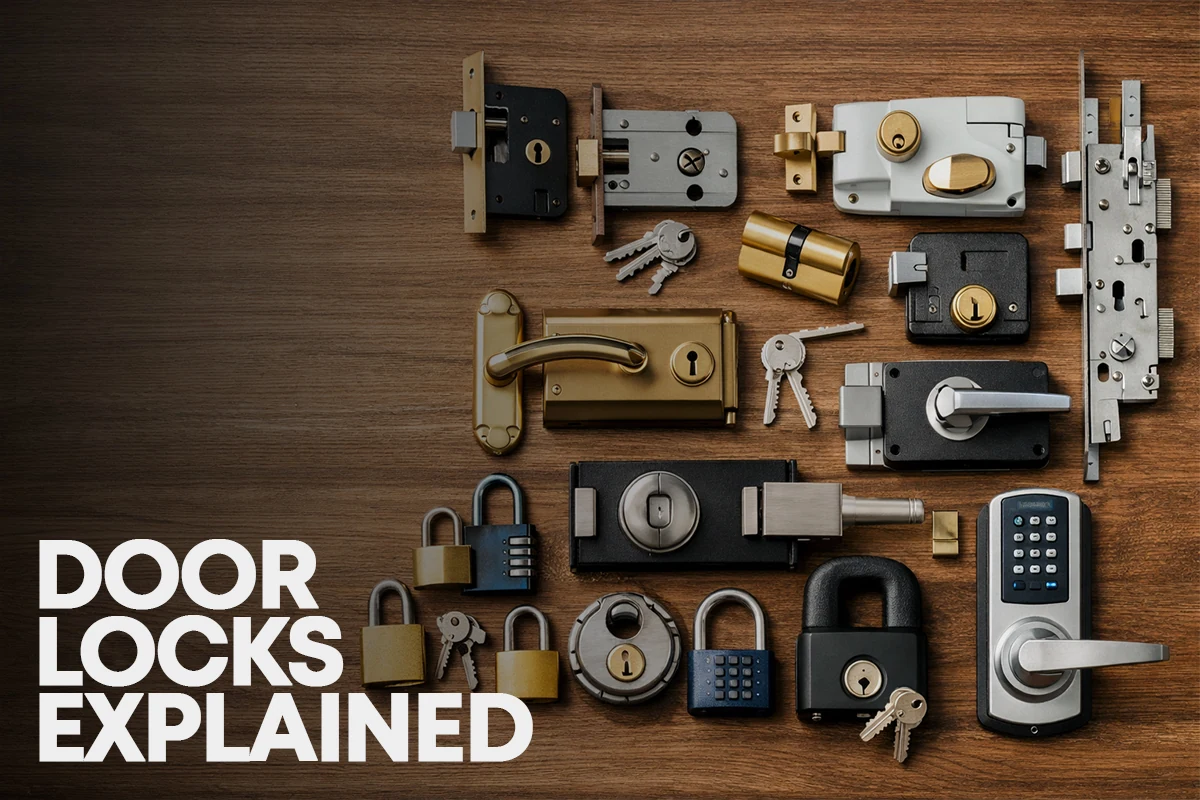
Oftentimes locks are quite an overlooked part of a door installation. With so many mechanical varieties to choose from, it can also be a bit confusing. However, choosing the right door lock is important to ensure security and peace of mind.
It becomes even more difficult to choose a lock when you consider the needs of a homeowner, a professional contractor or a DIY enthusiast. It also matters whether the lock is for a residential, commercial or industrial setting. Through this article, we aim to help you get the best lock for your home or office, making your decision-making process a little bit easier.
Key Factors to Consider
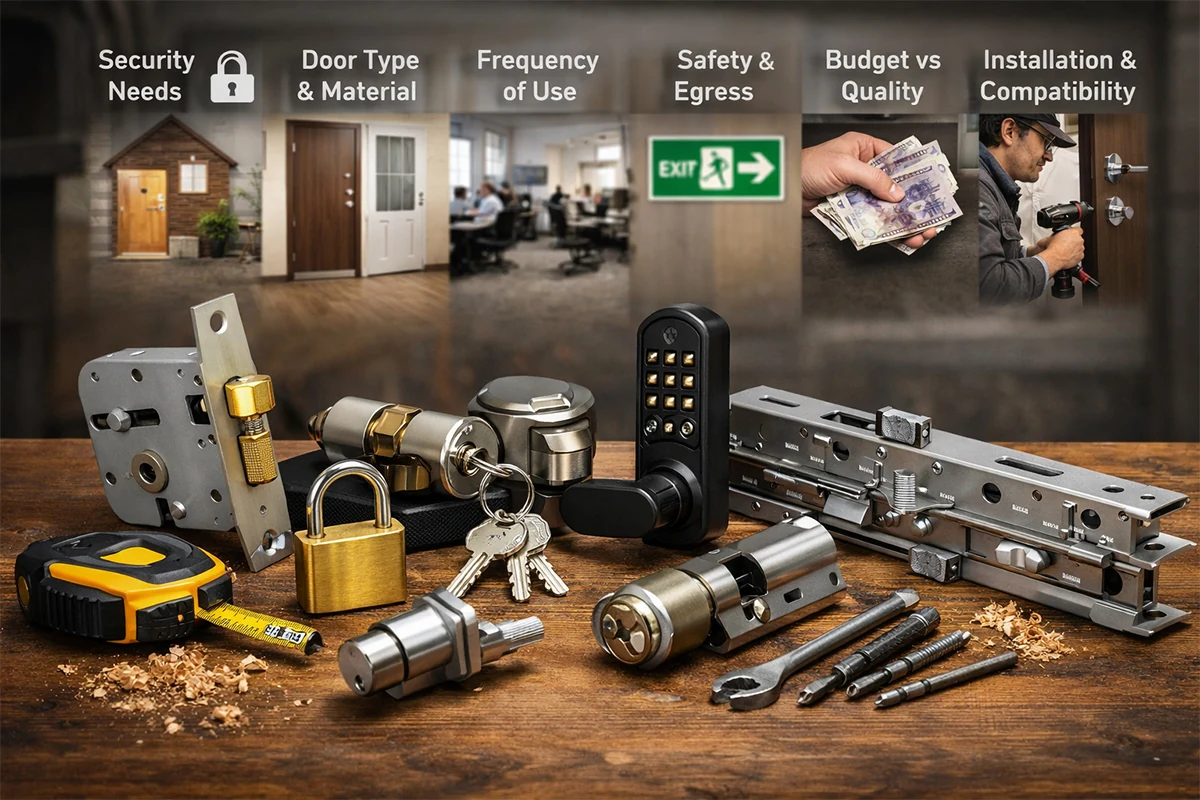
Security Needs - One other key factor to consider before acquiring a lock is the security level it will provide for the door. The security level of the lock will depend on the nature of the doors; for instance, external doors located in crime-prone areas will need high security locks as opposed to doors located inside the house. Make sure to match the lock's security level to the risk.
Door Type and Material - The type of door and how it is made can also influence the choice of locking mechanisms. Typically wooden and metal doors will have mortice locks that lock into a cavity within the door itself; whereas uPVC or composite doors typically have multi-point locking systems operated by a cylinder lock. Glass and other thin internal doors maybe require specific types of locking mechanisms and/or locks.
Frequency of Use and Durability - For an office or public building, heavy-duty locks that have been cycle tested are the one you want because they are durable and will be used dozens or even hundreds of times in a day. For a closet in your home that is only opened a couple of times in a day, using a standard lock is sufficient.
Safety and Egress - When you think of how locks work on the inside, consider this: any internal door or door that a person may need to exit quickly should have an internal mechanism that allows them to do just that. Usually, residences use a privacy lock (the thumb-turn style) that allows you to gain access to bathrooms, bedrooms, etc., from outside with a coin or screwdriver. For main doors, a key-operated deadbolt should be used for safety's sake. Some people will want to install a thumb-turn privacy lock on the inside of the main door too to prevent an occupant from being trapped inside in an emergency.
Budget vs Quality - You should invest in the best quality lock that you can afford, and quality is even more important when it comes to locks for external doors. A higher price for a door lock means that it is made using better quality materials and includes better features as compared to its cheaper counterparts.
Installation and Compatibility - How the lock could be fitted must also be considered. If the lock is to replace an existing one, it may be necessary to select a new lock of similar size and type in order to match the cut-out size. A competent DIYer can fit most types of locks, but in the case of new mortice cuts and multiple locking points, it could be advantageous to utilise the expertise of a trained professional in order to guarantee the lock operates as it ought to.
Types of Mechanical Door Locks
Mortice Locks
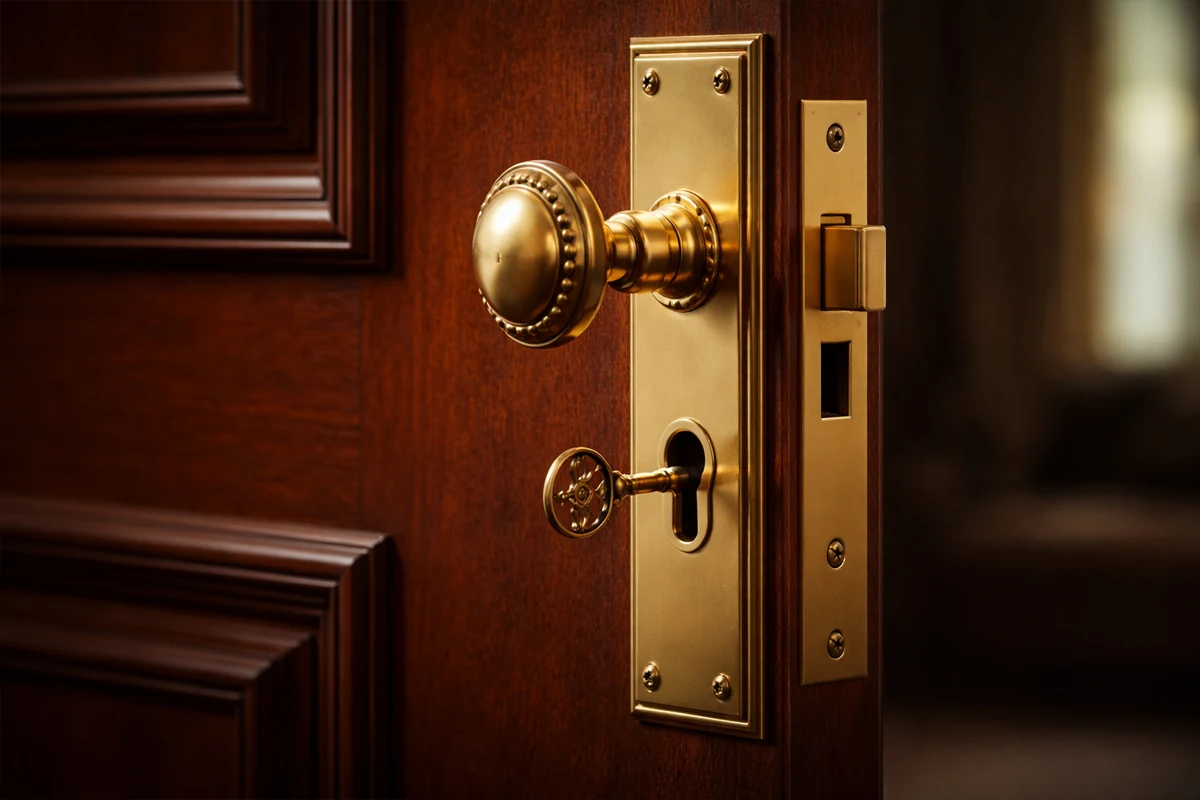
Mortice locks are fitted into a pocket (mortice) cut into the edge of the door, rather than mounted on the surface. They are very common on wooden and metal doors, especially exterior doors. They typically use a lever mechanism inside, and come in different lever counts, usually 2, 3, 4 and 5. In general, more levers mean higher security, since it increases the number of key combinations. A 5-lever mortice lock is standard for external doors, whereas 2- or 3-lever locks are used for internal doors. Mortice locks can be further divided into two major types:
Deadlock
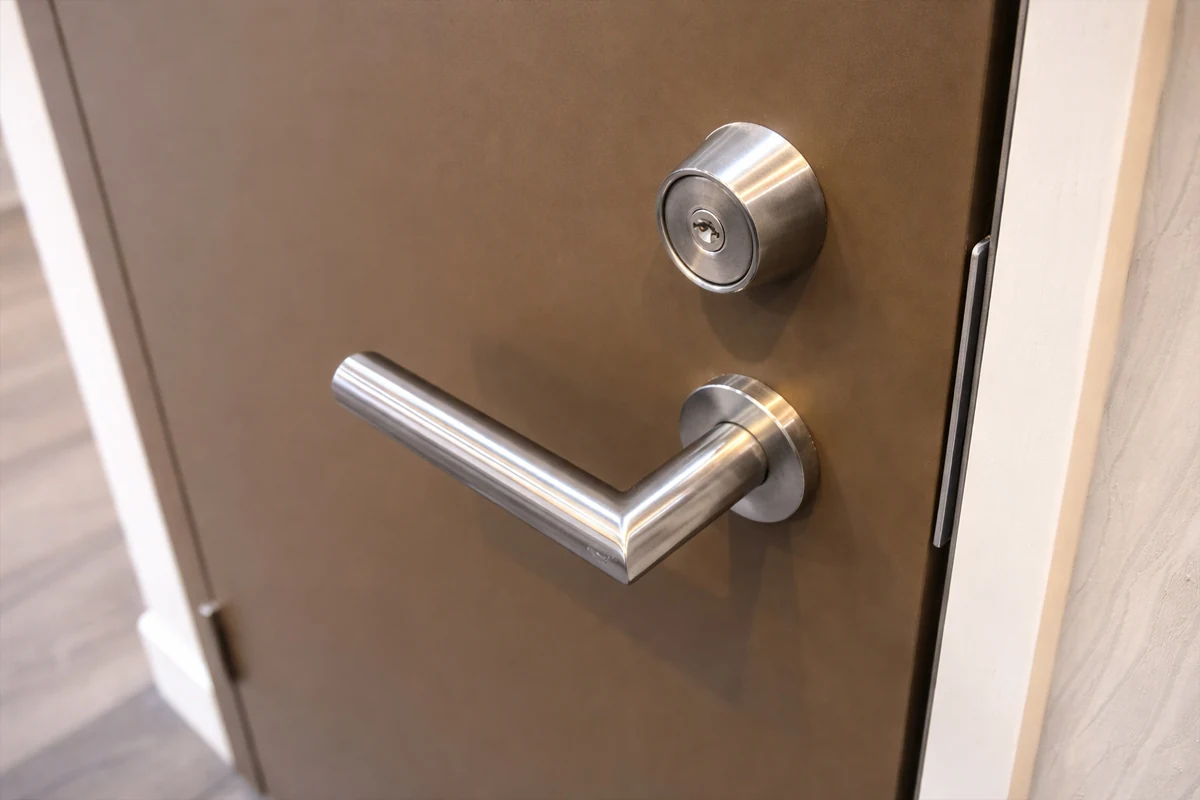
A mortice deadlock provides high security with a single solid bolt that slides into the door frame when locked. More importantly, it has no latch mechanism, so it does not automatically latch the door shut; it only secures when you turn the key. This means a door with just a deadlock won't stay closed unless the lock is engaged, so these are often used along with a separate latch or handle.
Five-lever deadlocks are the most secure variant for homes, and is mostly used for external doors. Make sure these locks are British Standards BS 3621 approved, which ensures that it has been rigorously tested against drilling, picking and other common break-in methods. By contrast, three-lever deadlocks might not be suitable for external security, but are perfect for internal doors, where moderate security and privacy is needed. Typically, smaller and easier to fit, only the keyhole and a small faceplate are visible when installed, giving it a neat appearance.
Sash Lock
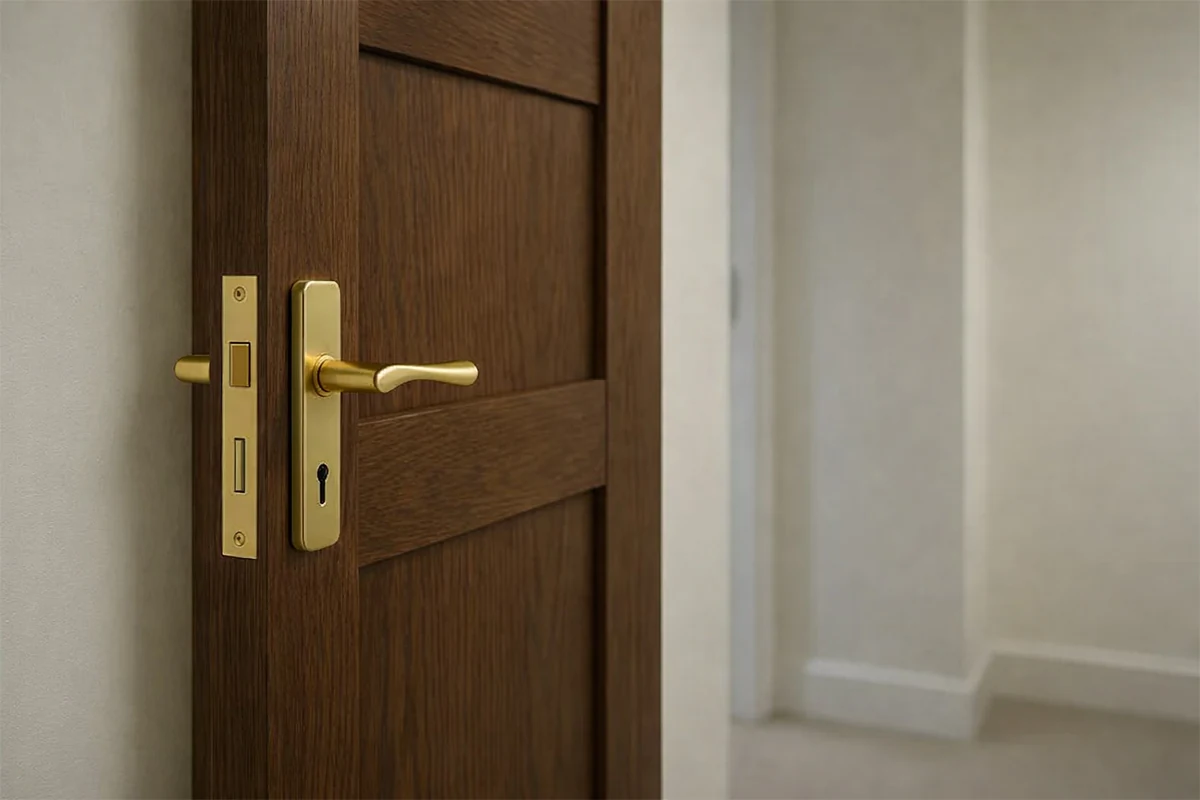
A mortice sash lock is essentially a deadlock combined with a latch mechanism in one unit. It has a bolt that locks into the frame, plus a spring-loaded latch that catches the door so it stays closed even when unlocked. Sash locks are used with a pair of handles; you turn the handle to retract the latch and open the door normally, but you need to use the key to lock or unlock the deadbolt portion. This type is convenient for entrance doors because the door will close behind you without locking you out.
Cylinder Locks
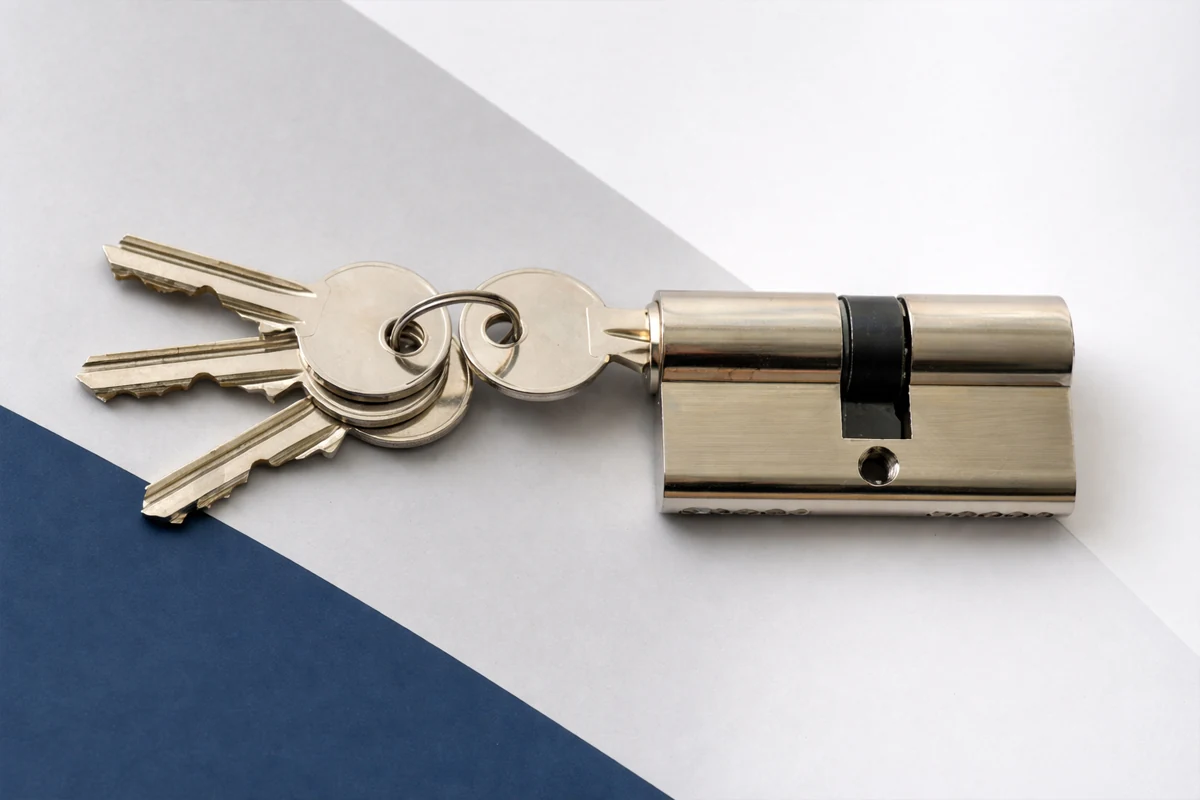
Locks using a pin-tumbler cylinder mechanism are often called cylinder locks. The euro profile cylinder, which is most common in the UK and Europe, is shaped like a barrel and can be found in many different types of doors including uPVC and composite doors. Many locksmiths will carry these locks as they are easy to replace. In addition to the ease of replacing these locks, many come with enhanced security features such as anti-drill and anti-pick functionality.
Euro-profile cylinders come in a few variants: -
Single cylinder: Keyed on one side and blank on the other. Commonly used where you only need key access from one side, e.g. a garage door where the inside has a simple thumbturn or no access.
Double cylinder: Keyed on both sides and requires a key to lock and unlock from either side. Common for internal doors.
Thumbturn cylinder: Key on the outside and a thumbturn knob on the inside. This allows quick, keyless exit from the inside, making it a good choice for flats or any situations where you want to ensure occupants can get out easily without searching for a key.
Rim Locks and Night Latches
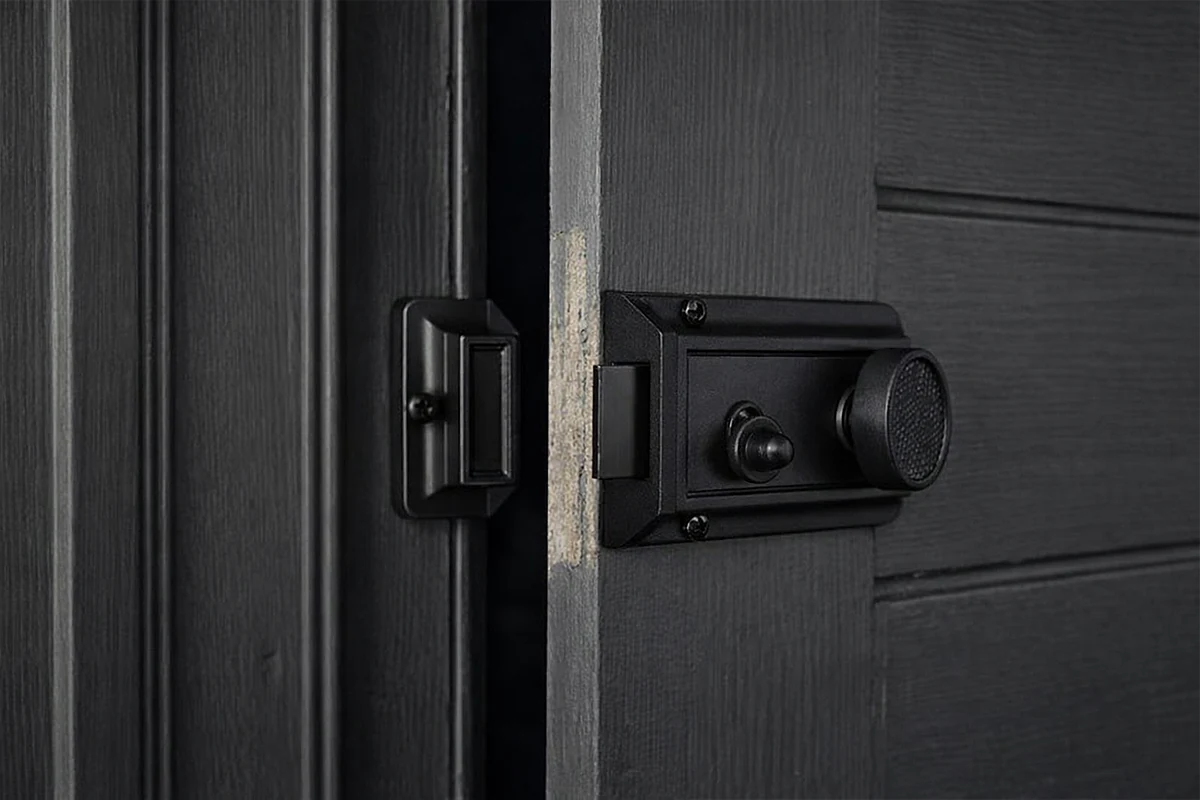
Rim locks come fixed to the surface of the door and are not sunk into it, unlike mortice locks. A variant of rim locks that is often seen within homes is a night latch, which comes fixed to the interior of a door. Typically, it comes with a circular rim cylinder fixed to its exterior that can be operated with a key, and an internal latch with a handle or a snib. Once shut, the spring latch automatically locks with a strike plate fixed to its frame. You then need the key to open it from the outside, but from the inside, you can typically just turn the knob to open.
Night latches have the benefit of self-latching, even if you forget to lock it, but by themselves they do not provide enough security to be used as the only lock on exterior doors. Their latch mechanism can sometimes be bypassed or forced. Older models may allow an intruder to open the latch mechanism by sliding a card in the latch, provided that the night latch does not have a deadlocking mechanism.
Multi-point locking system
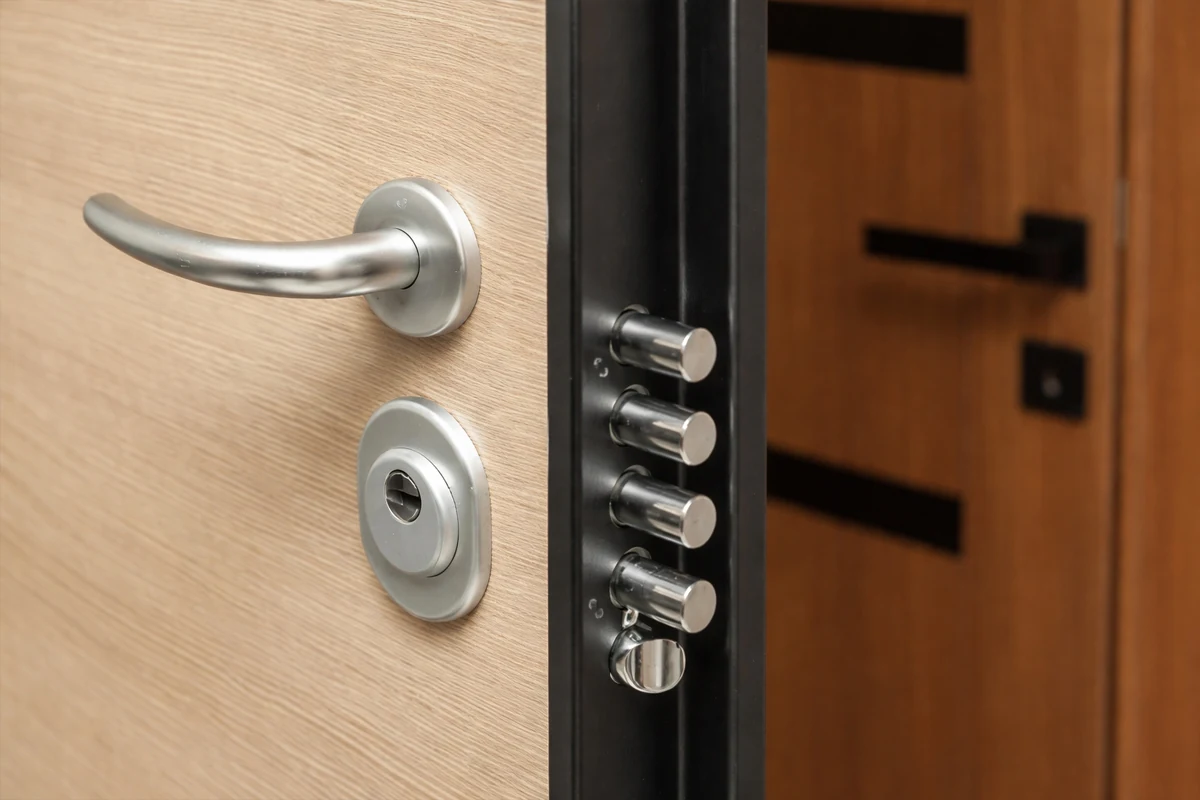
Multi-point locks are most frequently found on uPVC, composite and other modern factory-made doors. Instead of a single latch or bolt, it has multiple locking bolts that all engage when you lock the door with a key. The bolts often include a combination of hook bolts, deadbolts and rollers that secure the door at the top, bottom and center. When locked, the door is secured at several points along the frame, making it very resistant to forced entry. They are normally used for external doors like front/back doors, patio doors and French doors, instead of internal doors.
Padlocks and Specialised Locks
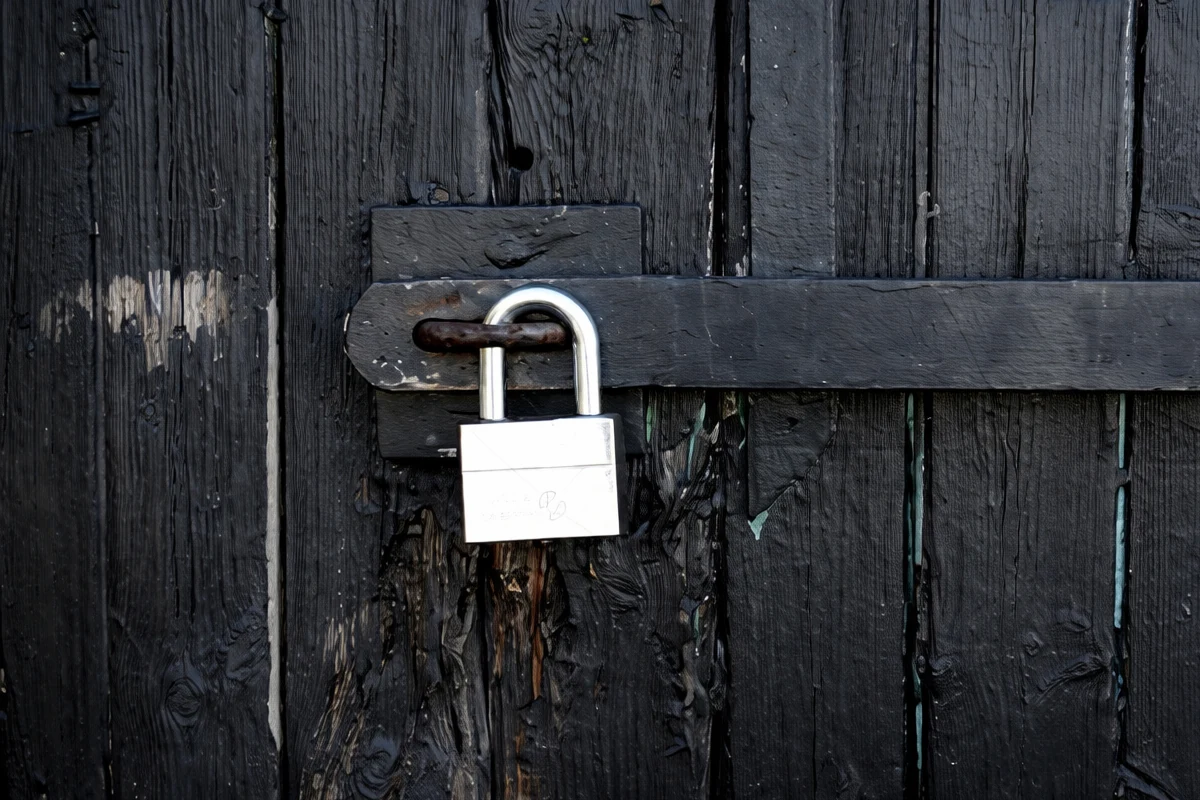
Thinking beyond the standard locks, consider padlocks and other speciality mechanical locks for your gates, sheds and storage units. These are portable locks that secure doors, gates or equipment by locking onto a hasp, chain, or other fitting. They are widely used in both residential and industrial applications, and come in varying security grades.
Other specialised locks include hasp and staple locks that are often used with padlocks on sheds or doors, slide and barrel bolts that are simple mechanical latches for additional security on doors/gates, and flush bolts, which are installed in the edge of a double door to secure the inactive leaf.
Residential Door Locks
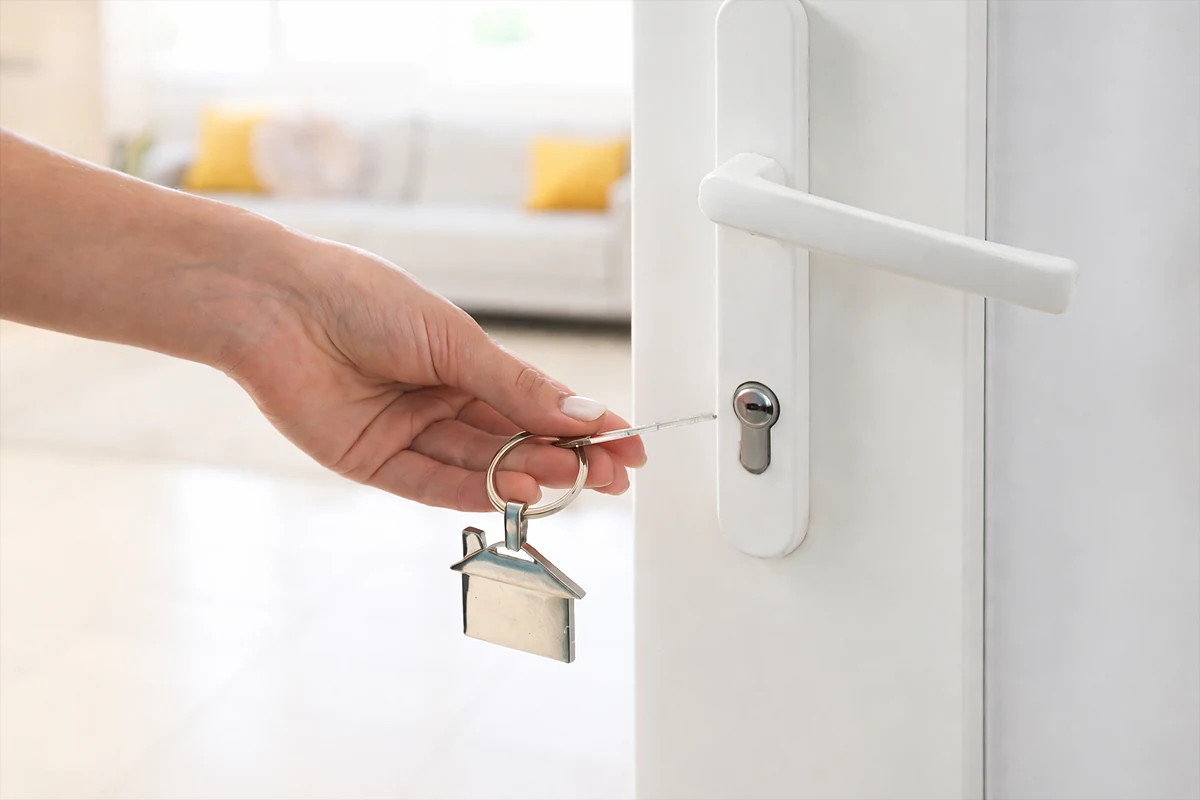
If you are in the market for door locks for your house, the most important thing about them would be security for exit doors and privacy for interior doors. On the exit doors in your house, we recommend the 5-lever mortice deadlock or sash lock for wooden doors or the key-operated multi-point locking system for uPVC/composite doors. Additionally, most home insurance policies would require a BS3621-approved lock to be fitted in the main exit doors in the house, as they potentially lower insurance premiums because of reduced risk.
Interior door locks in homes are usually about privacy and safety rather than high security. Bedrooms, bathrooms and home offices may have 3-lever mortice locks or simple tubular latches with locking knobs. For rooms that need a bit more security, a lockable lever handle set or a 3-lever mortice lock is a good choice. Aesthetics also play an important role when it comes to selecting internal door locks. They come in finishes to match door handles and many people choose locks that coordinate with their decor.
Commercial Door Locks
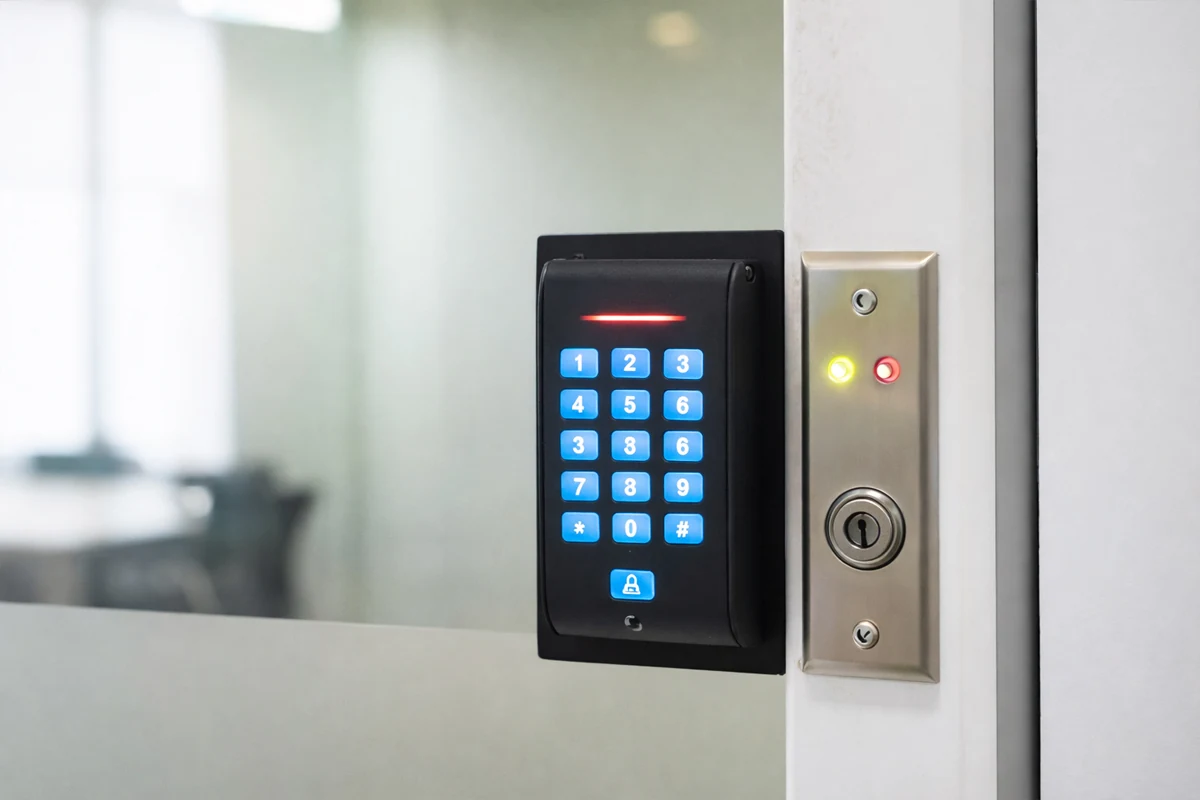
Locks in commercial settings must withstand frequent use, so business should opt for commercial-grade locks that are tested for heavy-usage cycles. Office spaces open to the public must adhere to fire safety regulations. This means that any door used as an emergency exit should use emergency escape locks that open from inside without a key at all times.
Different businesses have different security needs. A small shop might only lock up at night with a good deadlock or a roller shutter padlock. An office with sensitive information might need high-security locks with drill-resistant cylinders. Spaces like office IT rooms, storage closets or staff entrances could also benefit from mechanical keypad locks. Make sure that these are medium or heavy-duty models designed for commercial use. It saves the trouble of issuing keys to every employee and worrying about these keys getting lost.
Conclusion
Choosing a door lock can be confusing. Keeping in mind not only the lock's security, type and features, but also the door's material and location can be a lot. With this guide by your side, you can now make a more informed choice and get the perfect one for your door.
To further aid you in your decision-making process, we offer a wide variety of door locks right here on our website. From mortice locks to cylinder locks to even hasp & staple locks, we got it all. You can purchase them in a wide range of colours, so it doesn't look out of space in your decor. Check out the jaw-dropping deals on our website today!
Related Articles
Category
Doors & WindowsPosted On
5th December 2024


